
Study Finds 20% of Videos Shown to New YouTube Users Are AI
 techworldalerts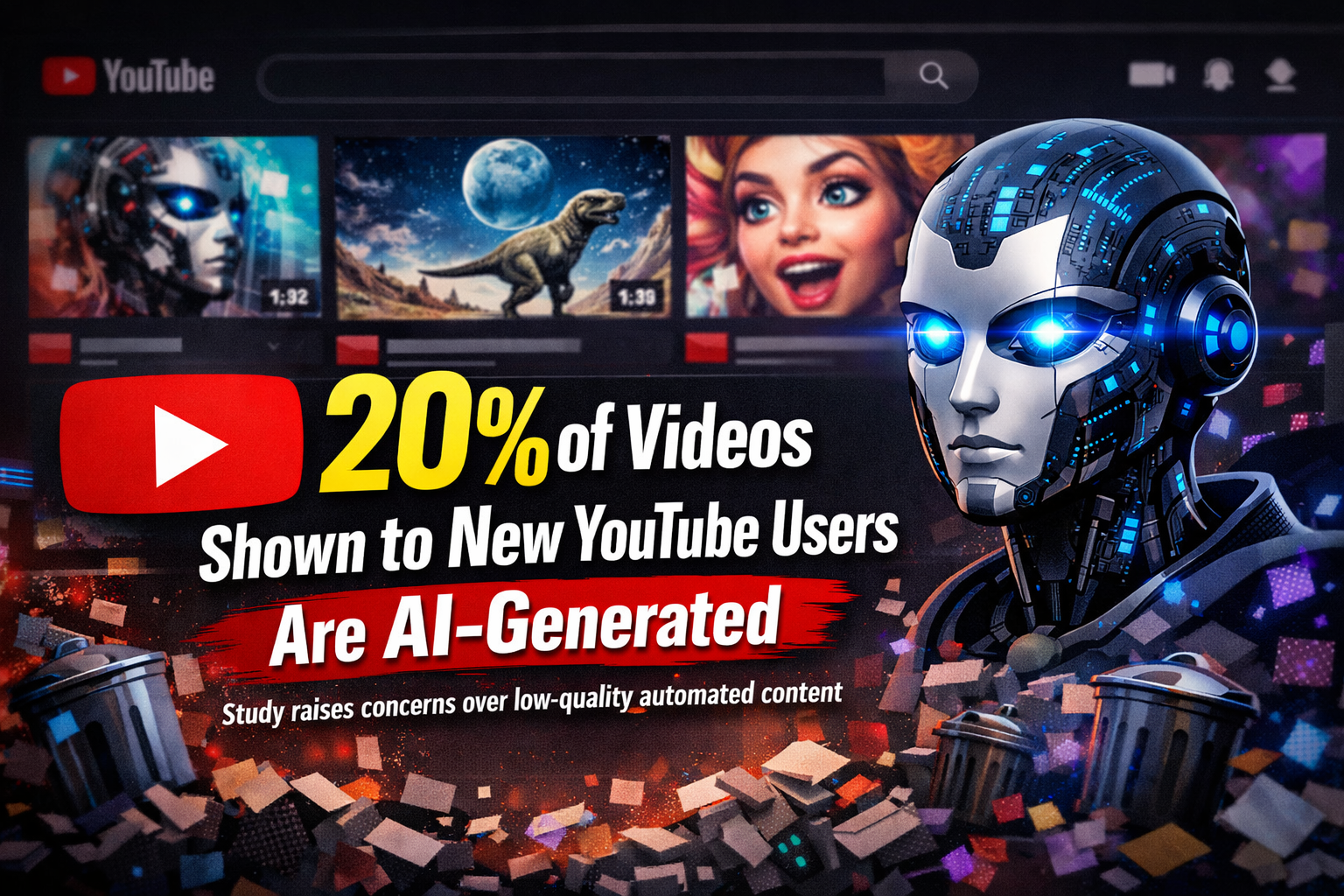
A recent analysis has revealed that more than 20% of the videos YouTube suggests to people who just create an account are low-quality, AI-generated clips, often designed purely to attract attention and views rather than to inform or entertain.
What the Research Found
The investigation, carried out by digital video tools company Kapwing, looked at 15,000 of the world’s most popular YouTube channels, specifically the top 100 channels from each country. According to the study, 278 of these channels produce only AI-created content.
These automated channels have become a major presence on the platform, collectively attracting billions of views and hundreds of millions of subscribers. Altogether, they have amassed around 63 billion views and 221 million subscribers, and researchers estimate they generate roughly $117 million in revenue annually.
Algorithm Testing with a New Account
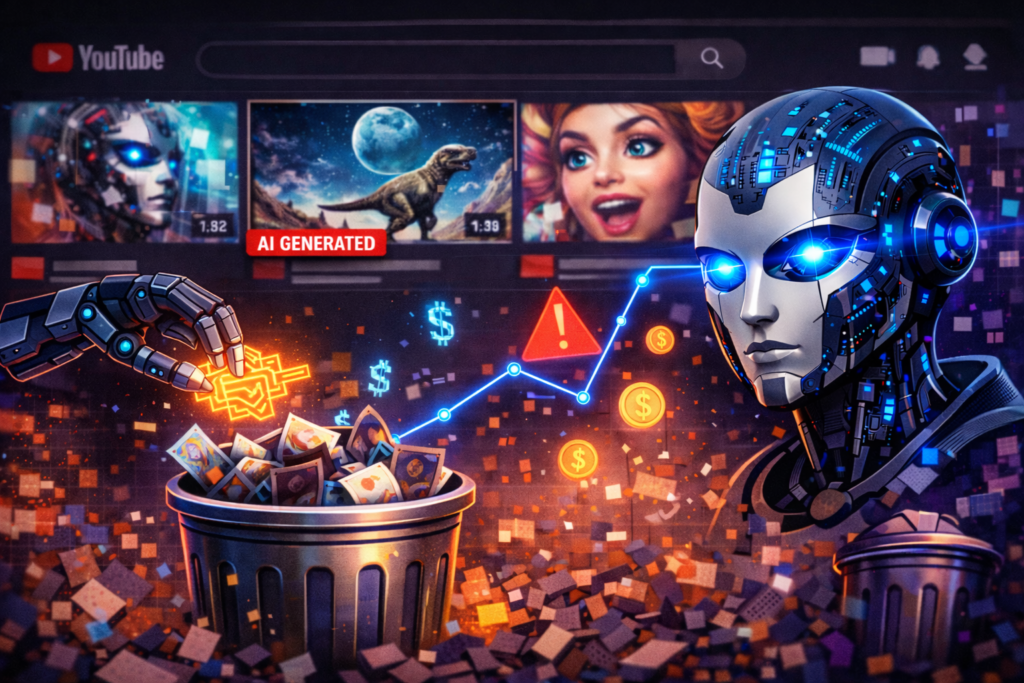
To test how YouTube’s system behaves with a fresh user profile, researchers created a brand-new account and observed the first set of video recommendations. Out of the first 500 videos shown, a striking 104 were identified as AI-generated content, over one-fifth of the total.
In addition to this, around a third of these initial recommendations were deemed “brainrot”, a broader category of low-value content that includes AI videos and other pieces designed mainly to keep viewers scrolling.
What Is “AI Content” on YouTube?
This type of content, sometimes called “AI slop”, refers to videos produced using generative AI tools that lack depth, originality, or meaningful substance. They are typically created in large quantities with minimal human involvement and can range from weird animations to nonsensical clips meant to maximize watch time.
Because these videos can still earn advertising revenue and might attract viewers simply due to algorithmic promotion, they form a lucrative niche for creators who optimize for views rather than quality.
YouTube’s Position & What It Means for Viewers
YouTube insists its recommendation system is designed to show users relevant and engaging content, regardless of how it’s made. But critics argue that the platform’s algorithms prioritize engagement metrics over authenticity or value, inadvertently boosting poorly made AI-generated videos.
This trend highlights broader concerns about the proliferation of automated content on large social platforms, where machine-produced media proliferates alongside human-crafted videos, blurring the line between genuinely engaging content and algorithm-optimized filler.