
Intel’s Big Move: A New Handheld Gaming Platform With a Custom Chip
 techworldalerts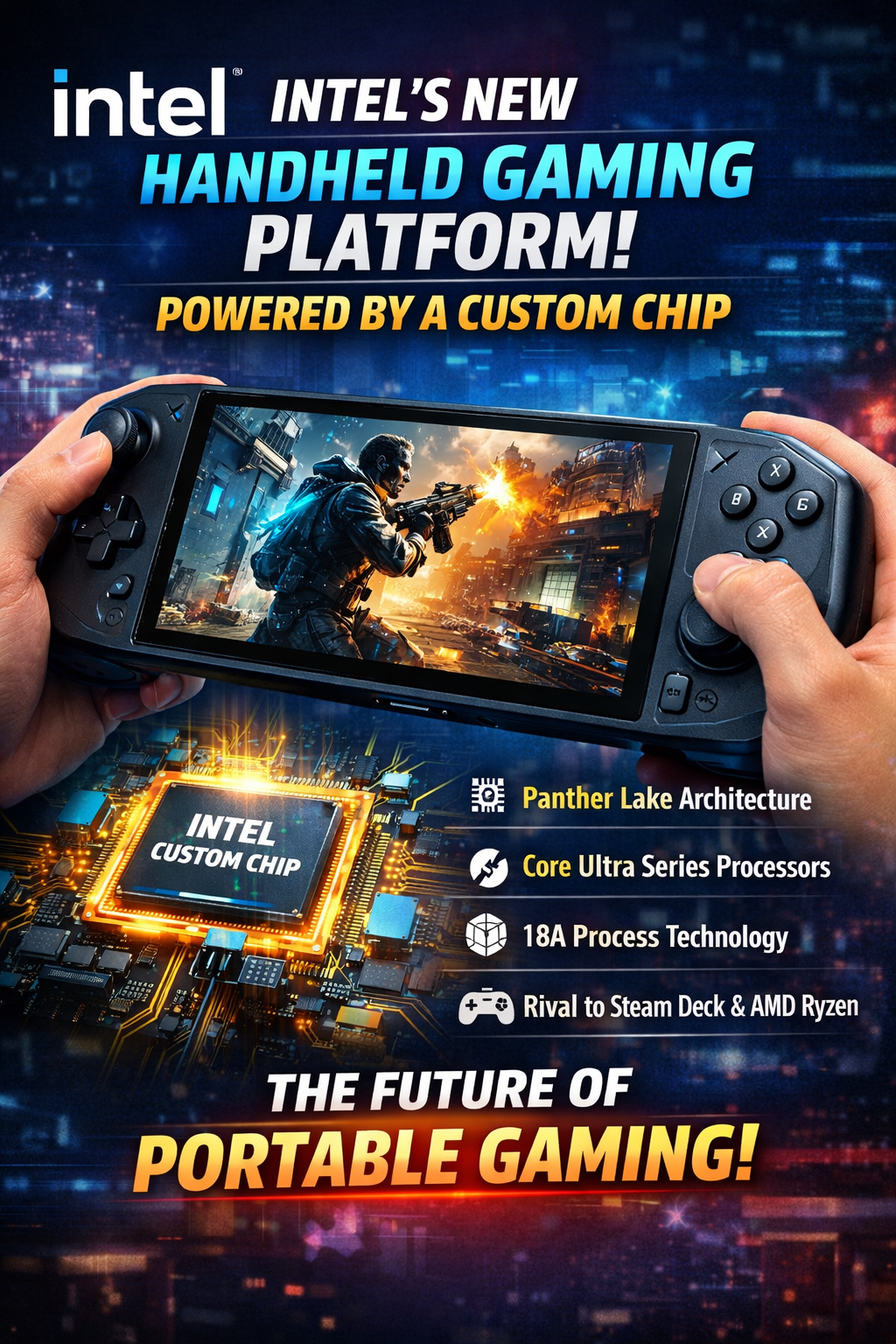
Intel is preparing to make a bold entry into the fast-growing handheld gaming market. The company has revealed plans to develop a dedicated handheld gaming platform, powered by a custom-designed chip, signaling a major shift in its gaming hardware strategy.
With portable gaming devices rapidly gaining popularity worldwide, Intel’s move could reshape competition in a market currently led by AMD and ARM-based solutions.
Intel’s Vision for Handheld Gaming
Unlike traditional mobile processors adapted for gaming, Intel is working on a purpose-built handheld gaming platform. This platform is expected to combine custom silicon, optimized software, and close OEM partnerships, creating a complete ecosystem tailored specifically for portable gaming devices.
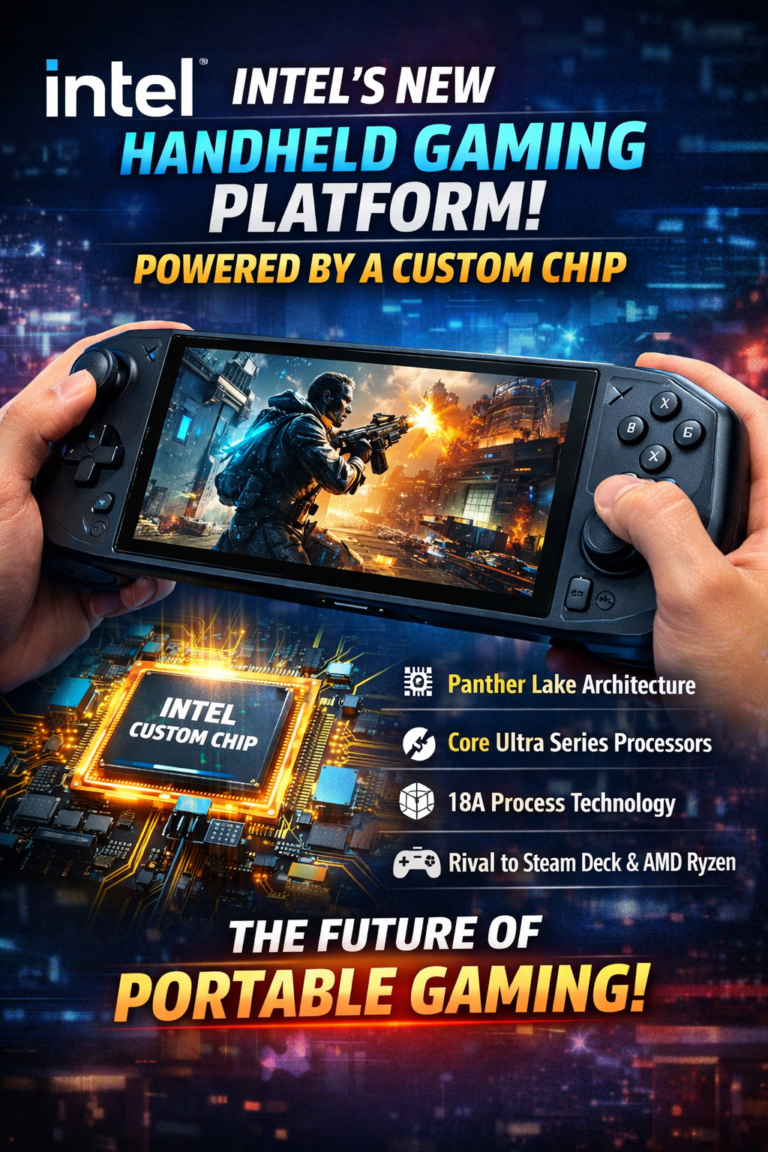
According to early reports, this initiative is centered around Intel’s upcoming Panther Lake architecture, which will power future Intel Core Ultra Series processors.
The Custom Chip Advantage
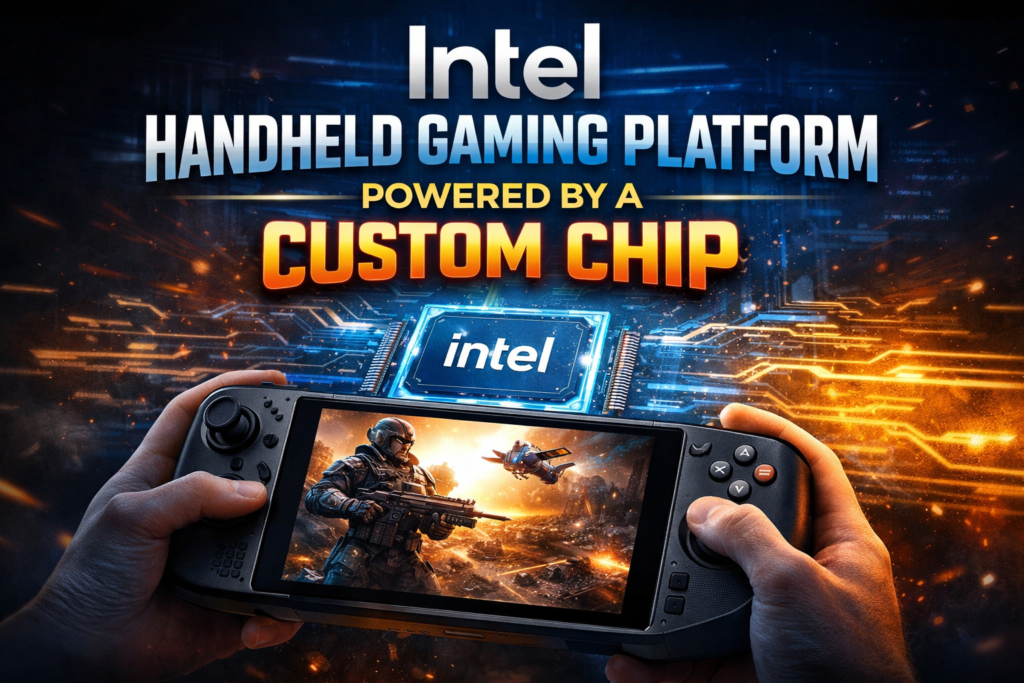
The biggest highlight of Intel’s announcement is the development of a custom gaming chip designed specifically for handheld devices. Unlike laptop CPUs repurposed for portable consoles, this chip aims to balance:
- High gaming performance
- Advanced integrated graphics
- Improved power efficiency
- Longer battery life
The processor is expected to be manufactured using Intel’s cutting-edge 18A process technology, which promises better performance per watt, an essential factor for handheld gaming.
Read More: France to Ban Social Media for Children Under 15 by 2026
Competing With AMD and the Steam Deck Ecosystem
Currently, the handheld gaming space is dominated by devices powered by AMD Ryzen Z-series chips, such as the Steam Deck, ASUS ROG Ally, and Lenovo Legion Go. Intel’s move directly challenges AMD’s stronghold by offering an alternative gaming-focused platform rather than just a standalone CPU.
This could give device manufacturers more flexibility and encourage competition, potentially leading to:
- Better pricing for consumers
- Faster innovation cycles
- More diverse handheld gaming devices
Why This Matters for Gamers
The global demand for portable PC gaming is increasing rapidly. Gamers want console-level performance in a compact, travel-friendly form factor. Intel’s entry could significantly improve:
- Integrated GPU performance for modern games
- Thermal efficiency in small devices
- Software optimization for Windows-based handheld gaming
- Developer support for Intel hardware
If Intel delivers on these promises, gamers could see smoother gameplay, better visuals, and longer gaming sessions without constant charging.
What to Expect Next
While Intel has not yet confirmed a release date or detailed specifications, more information is expected to be revealed throughout 2026, possibly at major tech events like CES.
OEM partners such as MSI, Acer, and Lenovo may be among the first to launch devices based on Intel’s new handheld gaming platform.
Read More: France and Malaysia Launch Investigations Into Grok Over Sexualized AI Deepfakes
Final Thoughts
Intel’s decision to build a handheld gaming platform powered by a custom chip marks a significant step toward the future of portable gaming. By focusing on custom silicon, power efficiency, and ecosystem integration, Intel is positioning itself as a serious competitor in a rapidly evolving market.
As handheld gaming continues to surge in popularity, Intel’s innovation could play a major role in defining the next generation of portable gaming devices.