

Crypto Regulations in UAE Explained | What Users Must Know
 techworldalerts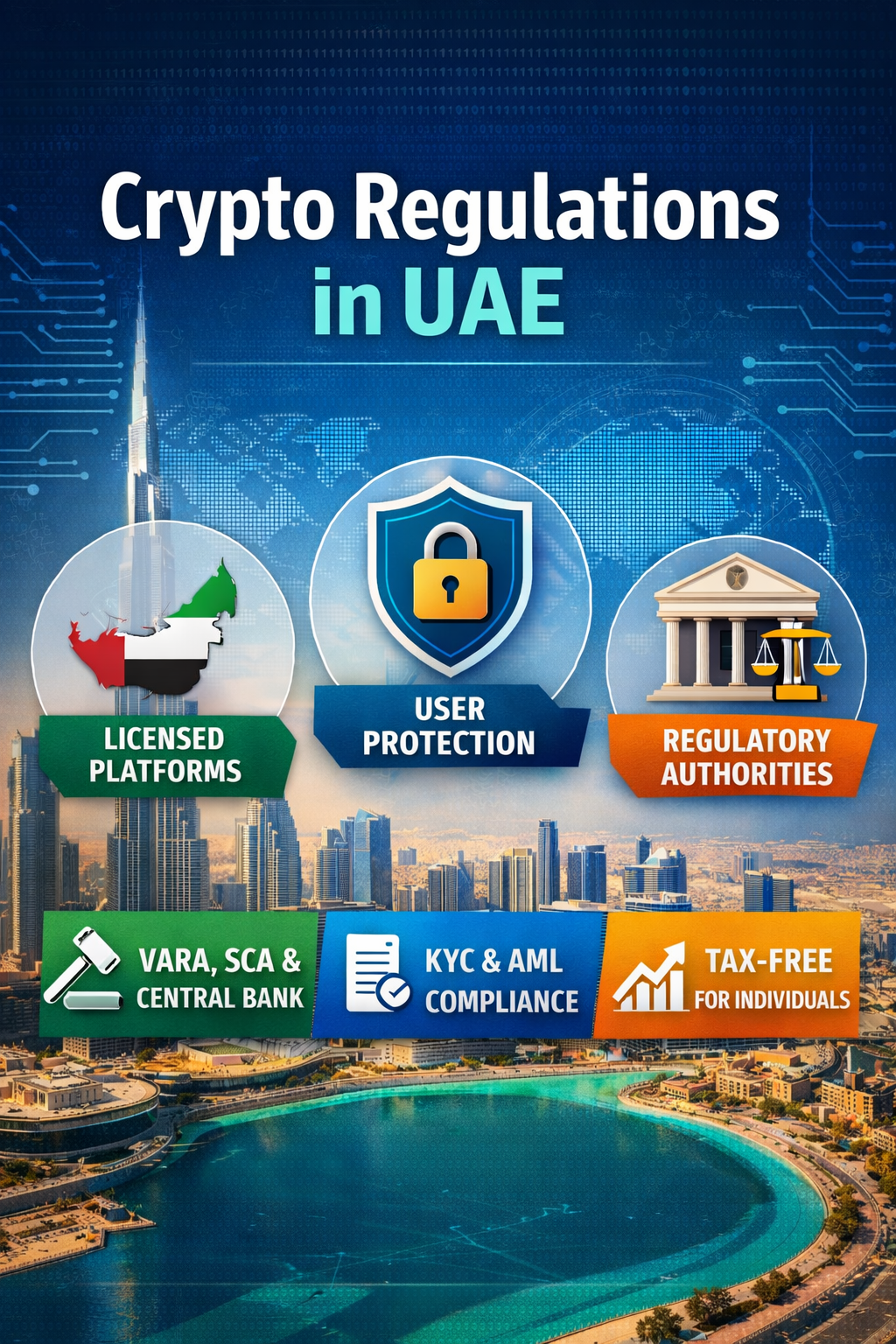
Crypto regulations in the UAE allow individuals and businesses to legally use, trade, and provide crypto services under clear regulatory frameworks. The country regulates crypto through federal and emirate level authorities to protect users, prevent financial crime, and support innovation. As of recent years, the UAE has become one of the most crypto friendly jurisdictions globally.
What Are Crypto Regulations in the UAE
Crypto regulations in the UAE are laws and regulatory frameworks that govern how cryptocurrencies, virtual assets, and related services can be used, traded, and offered.
The UAE does not ban crypto. Instead, it regulates it through licensing, compliance rules, and oversight authorities to ensure market integrity and user protection.
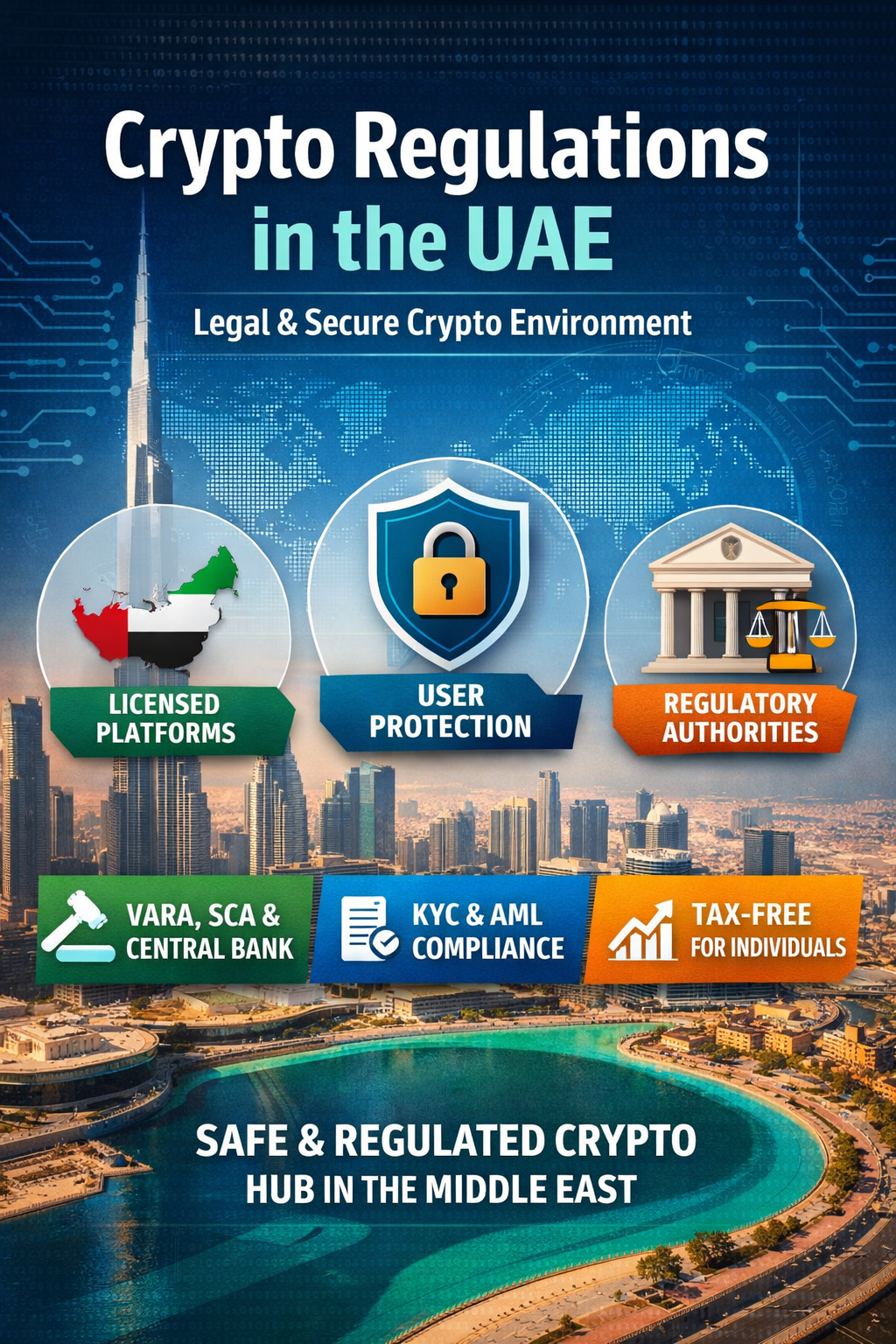
Key regulators include
- Virtual Assets Regulatory Authority VARA in Dubai
- Securities and Commodities Authority SCA at the federal level
- UAE Central Bank for payment related crypto activity
Is Cryptocurrency Legal in the UAE
Yes, cryptocurrency is legal in the UAE when used through licensed and regulated platforms.
Individuals can buy, sell, and hold crypto assets. Businesses can operate crypto exchanges, wallets, and related services after obtaining regulatory approval.
According to Chainalysis, the UAE ranked among the top countries for crypto adoption in the Middle East region, showing strong regulatory acceptance and user participation.
How Crypto Is Regulated in Dubai vs Rest of UAE
Dubai
Dubai regulates crypto through VARA. It oversees
- Crypto exchanges
- Brokers and dealers
- Custody and wallet providers
- Marketing and promotions
Companies must meet strict standards for security, transparency, and risk management.
Other Emirates
Outside Dubai, crypto assets classified as securities fall under the SCA. Payment tokens and stablecoins are monitored by the UAE Central Bank.
This structure ensures consistent crypto regulations across the country while allowing local innovation.
What Are the Rules for Crypto Users in the UAE
For individual users, crypto regulations in the UAE focus on compliance and safety.
Key requirements include
- Identity verification through KYC
- Anti money laundering checks
- Use of licensed platforms
There is currently no personal income tax on crypto gains for individuals, according to UAE Ministry of Finance guidelines. However, users should keep transaction records for compliance and future regulatory updates.
What Are the Rules for Crypto Businesses
Crypto businesses must obtain licenses before operating.
Common requirements include
- Regulatory approval from VARA or SCA
- AML and KYC compliance systems
- Cybersecurity controls
- Segregation of customer funds
According to VARA announcements, Dubai alone has issued multiple provisional and full licenses to global crypto firms, reinforcing its role as a regulated crypto hub.
Benefits of Crypto Regulations in the UAE
Clear crypto regulations provide several advantages.
- Legal certainty for users and investors
- Strong protection against fraud and misuse
- Increased trust in licensed platforms
- Attraction of global blockchain companies
The UAE government has publicly stated its goal to become a global digital asset and blockchain leader, which aligns regulation with long term growth.
How the UAE Protects Crypto Users
User protection is a core goal of crypto regulations in the UAE.
Regulators enforce
- Transparent disclosures
- Secure custody standards
- Controlled marketing practices
- Ongoing compliance monitoring
These measures reduce scam risks and improve overall market confidence.
Future of Crypto Regulations in the UAE
Crypto regulations in the UAE continue to evolve.
Upcoming focus areas include
- Stablecoins and asset backed tokens
- Decentralized finance oversight
- Cross border crypto transactions
The World Economic Forum has recognized the UAE as a leading jurisdiction for blockchain friendly regulation, reflecting strong international credibility.
FAQs
Are cryptocurrencies legal in the UAE?
Yes, cryptocurrencies are legal when used through licensed and regulated platforms under Crypto Regulations in UAE.
Can individuals trade crypto freely?
Individuals can trade crypto using approved exchanges after completing identity verification.
Is crypto taxed in the UAE?
There is no personal income tax on crypto gains for individuals, though business activities may be taxed.
Do I need a license to start a crypto business?
Yes, businesses must obtain proper licenses from relevant authorities such as VARA or SCA.
Are foreign crypto companies allowed?
Foreign companies can operate after meeting licensing and compliance requirements.
How do regulations protect users?
They enforce transparency, fund segregation, and security standards to reduce risk.